THE MOST COMPLETE, AUTHORITATIVE AND SECURE WEBSITE TO BUY WORKS OF ART.

Language
Currency






- Home
- Artists
- Alex Katz
- Andy Warhol
- Angelo Accardi
- Arman
- Arnaud Nazare-Aga
- Banksy
- Bearbrick
- Bernard Aubertin
- Christo
- Damien Hirst
- Daniele Fortuna
- David Kracov
- David LaChapelle
- Dorit Levinstein
- Felipe Cardena
- Georges Braque
- Giosetta Fioroni
- Helmut Newton
- Henri Matisse
- iClim
- Invader
- Jacopo Di Cera
- James Rosenquist
- Jean-Michel Basquiat
- Jeff Koons
- Joan Miró
- Johnny Depp
- José Molina
- Kaws
- Keith Haring
- Kenny Scharf
- Liu Bolin
- Lucio Fontana
- Marc Chagall
- Marco Glaviano
- Marco Lodola
- Mark Kostabi
- Gift Shop
- META VR
- BLOG
- ABOUT
- BUSINESS B2B


 Register
 Wishlist
 Contact Us
Carrello
Thank you!
1
2


3
Posted:
September 12, 2022

Artist's books are a collection of artworks by one or more artists in book form.
Whether an illustration of a famous work, a book designed from scratch or a collection of engravings and lithographs, the artist's book is one of the most interesting art forms. Because of their portability and convenience, they have allowed the artworks of great artists to reach an even wider audience, beyond the confines of the museum or gallery.
Chagall, Matisse, Picasso, Miró... When reading the names of these great masters what comes to mind are the greatest and most important artworks of the 20th century preserved in the world's most authoritative museums.
But did you know that these important masters of the avant-garde created numerous illustrations for various artists' books?
Artist Books and Illustrations by the Masters of the Avant-Garde
Discover five great masters of the avant-garde and their unmissable illustrations and artist's books.
- Marc Chagall: Artist's Books and Illustrations of the Great Classics
- Henri Matisse: Contemporary Literature and Experimental Technique
- Joan Mirò: Poetry and Engraving
- Pablo Picasso: an endless production
Marc Chagall: Artist's Books and Illustrations of Great Classics
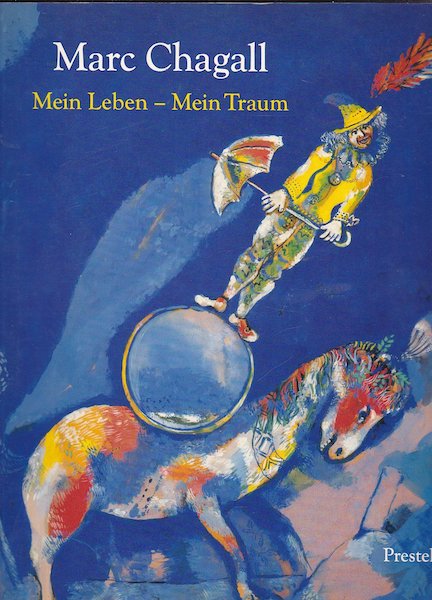
From the illustrations for Boccaccio's Decameron to those made to tell the stories of the Bible in full Chagall style, the artist made several illustrations and engravings throughout his career, often collected in artist's books.
The Chagall illustrator is an artist who recounts youthful experiences and events, showing a more intimate and lesser-known aspect of his style by creating artworks both in colour, an emblematic feature of his work, and in black and white.
The world described in his illustrations encompasses the different experiences of his life: from his childhood in Russia to Palestine, passing through Germany and America, but above all France, the country that welcomed the 'wandering' artist.
- Mein Leben (My Life). In 1922, the artist decided to produce an autobiography in the form of a portfolio in which his childhood and adolescence are retraced through etching illustrations.
- Dead Souls. In Nikolai Gogol's story 96 are etchings by Marc Chagall made in the 1920s, but published 30 years later due to continuous interruptions in work due to World War II.
- The Bible. Considered to be his favourite story from childhood, Marc Chagall produced several etchings depicting the Bible's main and most significant episodes in a collection of over seventy images.
- Fairy tales. Another successful author, Jean de La Fontaine, decided to have Marc Chagall do the illustrations for his book. He succeeded in giving colour to the fantastic characters in the text.
- Burning Lights. Among the many collaborations Chagall had during his long career as an artist and illustrator, the collaboration he had with his wife and muse Bella cannot go unmentioned. She decided to create this collection to recall her childhood in Vitebsk and her love affair with Marc Chagall, having the latter produce thirty-six inks to accompany the collection.
Henri Matisse: Contemporary Literature and Experimental Technique

An artist of colour but above all of line, Henri Matisse boasts a production of very important illustrations, including James Joyce's Ulysses.
It was in 1947, however, that the artist created and published a true artist's book, Jazz, a book produced in a limited edition of 250 copies. The book contains XX boards and several brush writings. The plates were made using a new technique pioneered by the artist during the last years of his life, papiers découpés also known as the "painting with scissors" technique. Confined to a wheelchair, the artist creates this collection of lithographs by cutting out coloured paper, which allows him to draw in colour.
Some of the plates, such as number VIII., entitled Icarus, or number XIII., The Sword Eater, have become true icons of modern art.
"These vividly coloured and violent images were born from the crystallisation of memories of the circus, folk tales, or travel. I made these written pages to dampen the simultaneous reactions of my chromatic and rhythmic improvisations, pages that form like a 'sound background' that supports them, surrounds them and thus protects their particularity." - Henri Matisse
Joan Mirò: Poetry and Engraving

Joan Mirò's activity as an illustrator is of fundamental importance in his artistic career, but it remains the least known aspect of his production.
Colourful and refined lithographs with a strong visual impact illustrate the words of important authors of the 1950s, one of them being Tristan Tzara. In the author's book entitled Parler Seul, the poems he composed in an asylum are combined with Joan Mirò's beautiful forms to create a fascinating dialogue between the two.
Another significant collaboration of the artist was with the author and poet Jacques Prévert, with whom he created the artist's book Adonides containing 44 double-page colour engravings in which Mirò's text and lines intertwine.
Fundamental for the artist was the publication of Album 19, a book whose introduction was written by the playwright Raymond Queneau and which contains several of the author's most famous lithographs featuring his iconic style.
Pablo Picasso: an endless production
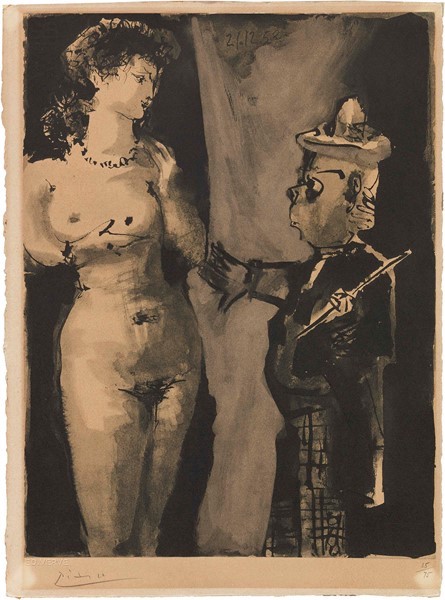
Considered to be the greatest engraver of the 20th century, Pablo Picasso's production includes countless lithographs in which the Spanish artist was able to highlight his full graphic potential.
The illustrations by Picasso are so original and innovative both in content and technique that they become autonomous from the accompanying texts. The graphic production that is created is thus independent and counts more than 2,500 engravings, taking priority over the painter's artistic production.
The plates deal with various themes ranging from eroticism to mythology and express an important emotional force derived from the artist's intellectual restlessness. Among his best-known illustrations are:
- The Metamorphoses. The text by the Roman poet Ovid is illustrated by Picasso through thirty etchings that rework fifteen of the book's more than two hundred and fifty Greek myths through a style of pure contours and discreet eroticism.
- The unknown masterpiece and the Comédie humaine. The texts by the French author Honoré de Balzac were illustrated by Picasso, who, after reading the texts, falls madly in love with them and decides to illustrate them with etchings and drawings engraved on wood.
Pablo Picasso's vast production also includes illustrations for other famous writers and friends of his, such as Max Jacob, Tristan Tzara, Paul Eluard and Jean Cocteau. Many of his works were born out of the complicity he had with the authors and joint experiments in which literature and painting merged, creating truly innovative masterpieces.